Roswell’s mill story is often told as a building story: a dam, a mill, a fire. The people in it get one line. This article puts them at the center, sticks to what the sources say, and then shows where each part of the story stands today, most of it a short walk from the Town Square. Our sources are the New Georgia Encyclopedia, Visit Roswell’s Civil War timeline and historic sites page, and the National Park Service.
What was the Roswell mill?
The New Georgia Encyclopedia says Roswell King came to the Cherokee gold country after gold was found there in 1828 and saw the waterpower where Vickery Creek, also called Big Creek, meets the Chattahoochee River. In the mid-1830s he and his sons Barrington and Ralph built a textile mill complex, incorporated in 1839 as the Roswell Manufacturing Company. By 1860, the encyclopedia says, it made cotton cloth, yarn, rope and tenting and was the largest cotton mill in north Georgia.
The mills worked for the war. The National Park Service says the Ivy Mill, part of the Roswell Mill group near the mouth of Big Creek, made cotton and wool, including the cloth called Roswell Gray used for Confederate uniforms.
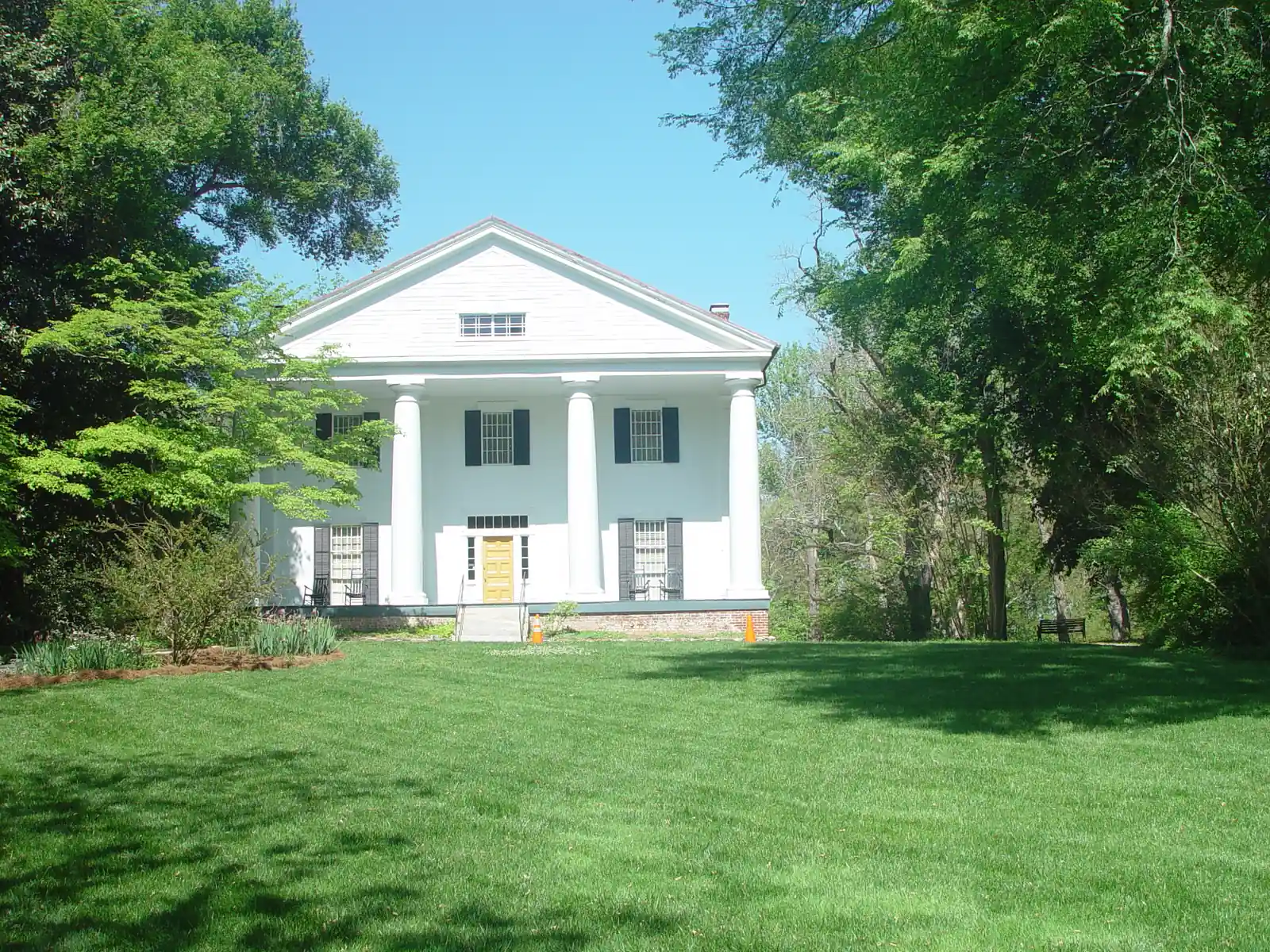
The mill workers are not the whole labor story. The town’s founding families also held people in slavery, and two of their houses show it today. Visit Roswell says Archibald Smith came to Roswell in 1845 with his wife, children and thirty enslaved people. It also says the reconstructed service grounds at Bulloch Hall include slave cabins, one of them used for exhibits on the role of African Americans in Roswell’s history.
- In the mid-1830s Roswell King and his sons Barrington and Ralph built a textile mill complex that was incorporated in 1839 as the Roswell Manufacturing Company, in what was then Cobb County (New Georgia Encyclopedia). New Georgia Encyclopedia: Roswell (last modified Sep 4, 2019)
- By 1860, the New Georgia Encyclopedia says, the Roswell Manufacturing Company made cotton cloth, yarn, rope and tenting and was the largest cotton mill in north Georgia. New Georgia Encyclopedia: Roswell (last modified Sep 4, 2019)
- The National Park Service says the Ivy Mill ruins, part of the Roswell Mill group, stand near the mouth of Big Creek in the Vickery Creek Unit, and that the mill made cotton and wool, including the "Roswell Gray" used for Confederate uniforms. National Park Service: Ivy Mill Ruins
What happened in July 1864?
Visit Roswell’s timeline gives the dates. Union troops arrived from Marietta on July 5, 1864, and on July 6 they destroyed the Roswell Manufacturing Company. The New Georgia Encyclopedia says Sherman approved destroying the mills and ordered the mill workers, more than 400 of them and mostly women, charged with treason and sent north.
- July 5, 1864: Union troops reach Roswell from Marietta (Visit Roswell).
- July 6: the Roswell Manufacturing Company is destroyed (Visit Roswell).
- Before they leave town: the workers are held overnight under guard on the Town Square, Visit Roswell says.
- July 10: the workers go by wagon to Marietta and are held at the Georgia Military Academy (Visit Roswell).
- July 15: they are put on trains north (Visit Roswell). The encyclopedia says the trains went toward Louisville, Kentucky, and that many people were sent on to Indiana.
- Visit Roswell's Civil War timeline says Union troops arrived in Roswell from Marietta on July 5, 1864, and destroyed the Roswell Manufacturing Company on July 6. Visit Roswell (Roswell CVB): Civil War
- The New Georgia Encyclopedia says Sherman approved destroying the mills and ordered more than 400 mill workers, mostly women, charged with treason and sent north. They and their children went by wagon to Marietta, then by train toward Louisville, Kentucky; many were sent on to Indiana. New Georgia Encyclopedia: Roswell (last modified Sep 4, 2019)
- Visit Roswell says the mill workers were sent by wagon to Marietta on July 10, 1864, held at the Georgia Military Academy, and put on trains north on July 15. Visit Roswell (Roswell CVB): Civil War
Charged with treason is the phrase the encyclopedia uses, and it is worth reading slowly. These were textile workers, mostly women, from a mill group that made cloth for Confederate uniforms, and their children went north with them.
How many people?
The count depends on the source. The New Georgia Encyclopedia says more than 400. Visit Roswell’s historic sites page says 400, and one of its tour listings says nearly 400. We print each figure with its source instead of picking one.
The sources we used do not say how many of the workers came back to Roswell, or what happened to most of them in the North. We are not going to fill that gap with a guess.
What happened to the mill after the war?
The New Georgia Encyclopedia says one cotton mill and the woolen factory were rebuilt after the war and a second cotton mill went up in 1882. The last mill burned in 1926, was rebuilt, and ran as Southern Mills from 1947 to 1975. The mill ruins are now a historic site.
Where can I see it today?
Most of the sites sit close together. Measured in straight lines between the map points in our places data, the Town Square is about 230 meters from Old Mill Park and about 250 meters from the mill workers monument.
- Roswell Town Square, 610 Atlanta Street: where Visit Roswell says the workers were held overnight under guard. It also says President Theodore Roosevelt later visited the square.
- Lost Mill Workers of Roswell monument, Sloan Street Park, 75 Sloan Street: it honors the mill workers, mostly women and children, who were charged with treason and sent north. Visit Roswell describes it as a monument to the 400 mill women and children.
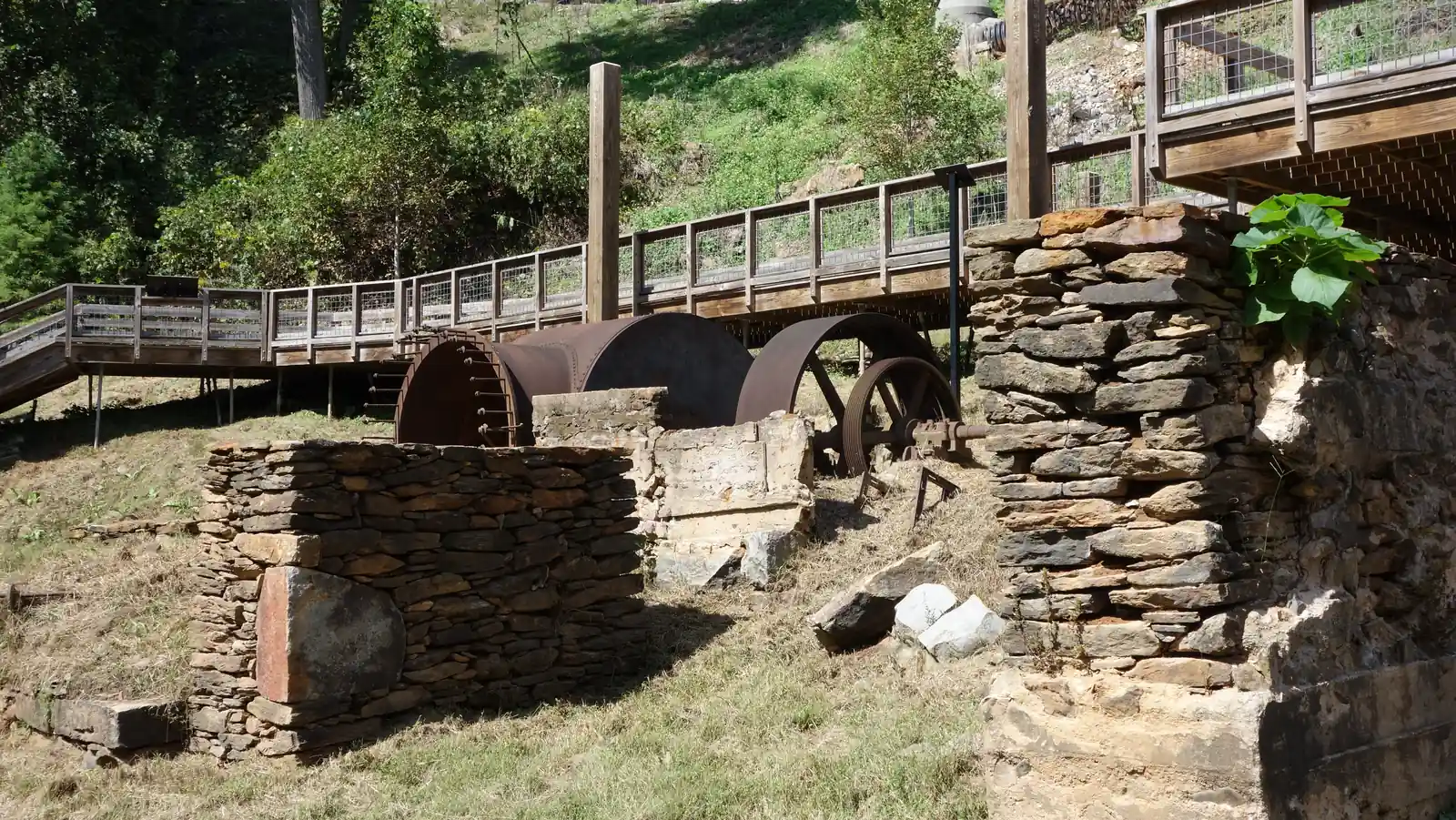
- Vickery Creek Old Mill Park, 95 Mill Street: trails along the creek pass the ruins of the company’s mills, the 30-foot dam and the millrace. The City lists free admission and free parking, with the park open from one hour before sunrise to one hour after sunset. Water access at the waterfall has been suspended since Aug. 16, 2024.
- The Machine Shop, 85 Mill Street: Visit Roswell calls it the sole existing building of the 1839 company. It is now an events facility, and the interpretive trail beside it leads to the ruins and the waterfall made by the dam.
- The Bricks, Sloan Street at Mill Street: mill-worker apartments the company built around 1840. They are private homes and businesses now, so look from the street.
- Ivy Mill ruins: near the mouth of Big Creek in the National Park Service’s Vickery Creek Unit. The NPS requires a $5 one-day pass or a $40 annual pass in the Chattahoochee River National Recreation Area.
- Vickery Creek Covered Pedestrian Bridge: built in 2005 and 161 feet long, by Visit Roswell’s account, it links Old Mill Park and the historic district with the recreation area trails.
- Visit Roswell lists Roswell Town Square at 610 Atlanta Street and says the 400 mill workers were held there overnight under guard in 1864, and that President Theodore Roosevelt visited the square and Bulloch Hall. Visit Roswell (Roswell CVB): Historic Sites
- Visit Roswell says ruins of the Roswell Manufacturing Company mills lie along the Old Mill Trail on Vickery Creek, where a 30-foot dam and millrace were built to power the mills. It says a monument to the 400 mill women and children stands in the park on Sloan Street. Visit Roswell (Roswell CVB): Historic Sites
- Visit Roswell calls the Machine Shop, a two-story late Georgian building, the only existing building of the 1839 Roswell Manufacturing Company. The CVB says it is now an events facility, and the interpretive trail beside it leads to the mill ruins and the waterfall made by the dam. Visit Roswell (Roswell CVB): Historic Sites
- Visit Roswell says the Vickery Creek Covered Pedestrian Bridge in Old Mill Park links the historic district with the Chattahoochee River National Recreation Area. It says the bridge was built in 2005, spans 161 feet and is the newest covered bridge in Georgia. Visit Roswell (Roswell CVB): Historic Sites
Three more stops fill in the story. Visit Roswell says the historic sanctuary of Roswell Presbyterian Church, 755 Mimosa Boulevard, built in 1840, served as a hospital for Union soldiers. The Roswell Ghost Tour describes Founders Cemetery on Sloan Street as the burial site of Roswell King. The Roswell History Museum, run by the Roswell Historical Society on the second floor of 950 Forrest Street, is free and open Wednesday to Saturday, 11 a.m. to 3 p.m., by Visit Roswell’s listing.
Is there a guided walk?
The City’s History Seek walking tour on Sat., Nov. 7, 2026, 1 to 2:30 p.m., starts at the Town Square and covers Roswell King’s planned mill town, the Presbyterian church and the planters’ homes. It costs $12, and registration closes Nov. 6. For a walk on your own, our Roswell Mill guide covers the trails and parking, the history page has the full timeline, and the day planner puts the square, the monument and the ruins in walking order.
History Seek Saturdays: Walking Tour of Roswell's Historic District
Organiser date for 2026A guided walk of about 1.5 hours from the town square down Mimosa Blvd. and Bulloch Ave., covering Roswell King's planned mill town, the Presbyterian church and planters' homes, ending with a look inside one house. Register in advance.
Sat., Nov. 7, 2026 on Roswell365; registration deadline Nov. 6.
Add to calendar: Google Apple / Outlook (.ics)
$12, advance purchase Source: Roswell365: History Seek Saturdays walking tour, checked 2026-10-18
Mill questions
What happened to the Roswell mills in the Civil War?
Visit Roswell's timeline says Union troops reached Roswell from Marietta on July 5, 1864, and destroyed the Roswell Manufacturing Company on July 6. The New Georgia Encyclopedia says Sherman approved destroying the mills. After the war one cotton mill and the woolen factory were rebuilt, and a second cotton mill went up in 1882.
What happened to the Roswell mill workers in 1864?
The New Georgia Encyclopedia says more than 400 mill workers, mostly women, were charged with treason and sent north with their children. They went by wagon to Marietta and then by train toward Louisville, Kentucky, and many were sent on to Indiana. Visit Roswell says they were held overnight on the town square, and a monument to them stands in the park on Sloan Street.
Source: New Georgia Encyclopedia: Roswell (last modified Sep 4, 2019)
Can you see the old Roswell mill ruins?
Yes. Visit Roswell says the ruins of the Roswell Manufacturing Company mills lie along the Old Mill Trail on Vickery Creek, near a 30-foot dam and millrace. An interpretive trail beside the Machine Shop at Old Mill Park, 95 Mill Street, leads to the ruins and the waterfall. The National Park Service also protects the Ivy Mill ruins near the mouth of Big Creek.
What is the covered bridge at Vickery Creek?
Visit Roswell says the Vickery Creek Covered Pedestrian Bridge, in Old Mill Park, is a footbridge linking the historic district with the Chattahoochee River National Recreation Area. It says the bridge was built in 2005, spans 161 feet and is the newest covered bridge in Georgia. The National Park Service lists a Covered Bridge entrance for its Vickery Creek unit.
What is Roswell Gray?
The National Park Service says the Ivy Mill, part of the Roswell Mill group on Big Creek, made cotton and wool, including a blend known as Roswell Gray that was used to make Confederate uniforms during the Civil War. The Ivy Mill ruins stand near the mouth of Big Creek in the Vickery Creek Unit of the Chattahoochee River National Recreation Area.
Written by the Downtown Roswell Editorial Team. AI tools help us draft; people check every fact before it publishes.
Dates, rules and hours can change. The organisers have the final word: City of Roswell